Watergate Seven trial
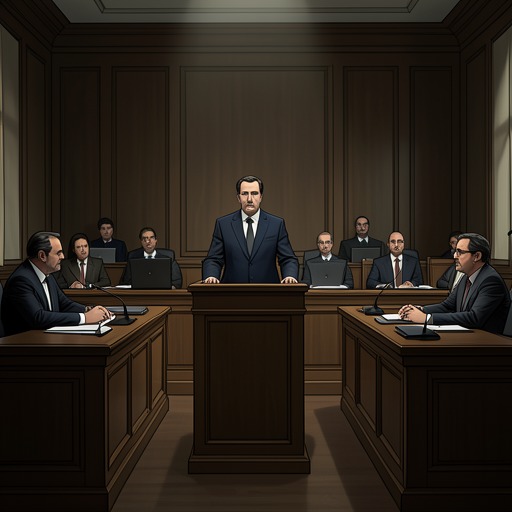
All the President's MenThe Watergate Seven trial brought the seven defendants in the Watergate break-in before a federal court, but it did not resolve the larger question of who had authorized and financed the operation. The prosecution presented the burglary as the work of a limited conspiracy led by Gordon Liddy; Howard Hunt and four Miami defendants pleaded guilty, while a jury found Liddy and James McCord guilty. The proceedings established criminal responsibility for those defendants yet left the larger political chain of command largely beyond the trial’s account.
Background and Competing Accounts
In the days before the trial, Bernstein and Woodward prepared a long analysis arguing that the government’s case would leave major questions about the financing and sponsorship of Watergate unanswered, while neglecting the wider campaign of political espionage and sabotage. Their editor, Harry Rosenfeld, held the piece until the trial began. The reporters’ concern was not simply that the case might fail to produce convictions, but that a successful prosecution could still tell a drastically incomplete story.
A Miami defendant told Bernstein that the men hoped to argue they had been assured the raid was approved by high government officials and were therefore undertaking an authorized mission. That account was a proposed defense, not a finding established in court. Hunt, despite wanting a unified defense, opposed any strategy that might imply the conspiracy reached beyond the seven defendants. The tension between a defense that might invoke official authorization and an effort to keep responsibility within the group framed the trial before the jury heard its first argument.
Opening Day and the Prosecution’s Case
On January 8, Hunt arrived at the courthouse looking gray and gaunt, in a black topcoat with a worn fur collar. His wife had died in a plane crash only weeks earlier; in the courthouse corridor, he walked beside Liddy with an arm raised around his partner’s neck, appearing to seek support. Liddy presented a striking contrast: he smoked a large cigar, smiled and waved, and later sprang up to greet prospective jurors with a politician’s flourish. James McCord arrived more quietly and declined reporters’ questions with a brief “No comment.”
Chief Judge John Sirica had assigned the case to himself. At a pretrial hearing, he had made clear that he wanted jurors to consider not only what the defendants had done, but why they had entered the Democratic National Committee headquarters, whether they had been paid, who had hired them, and who had started the operation. His questions set a broader investigative ambition against the narrower task of deciding the defendants’ guilt.
The opening statement by chief prosecutor Earl Silbert lasted two hours. Silbert said he could account for only $50,000 of the $235,000 in presidential campaign funds handed to Liddy in $100 bills. Drawing chiefly on statements by Jeb Magruder and Herbert L. Porter, he portrayed the money as intended for legitimate intelligence-gathering and argued that Liddy had acted on his own in planning and carrying out the illegal break-in. It was the same limited explanation The Washington Post’s reporters had heard earlier from committee employees: a low-level operation detached from the people who controlled the campaign.
Bernstein and Woodward found that explanation difficult to reconcile with the sums involved. The Committee for the Re-election of the President would not plausibly spend $235,000 on inconsequential intelligence readily available from the FBI and local police, they reasoned; its managers would have wanted to know the purposes and results of such expenditures. The prosecution’s account could be formally forceful and still fail, in the reporters’ view, the test of common sense. Their doubt echoed a lesson Woodward recalled from Yale: “The divine right of kings did not extend to overturning the laws of nature and common sense.”
Guilty Pleas and Verdicts
After the opening statement, Hunt changed his plea to guilty. Outside the courtroom, he said that no higher-ups had been involved in the conspiracy “to my personal knowledge.” The qualification mattered: it limited the claim to what Hunt said he knew, rather than establishing that senior officials had no role. His plea settled his own case but did not answer the question Sirica had put to the proceedings—who had initiated the operation.
The four Miami defendants also changed course. After The Washington Post published a report about Hunt’s maneuvers, they fired their attorney, Henry Rothblatt, and a new lawyer entered guilty pleas for all four in court that morning. The timing made the shift a dramatic turn in the proceedings, though the available account does not establish that the newspaper report alone caused their decision. When Sirica questioned Bernard Barker, the defendant bounced on his toes, wrung his hands behind his back, and bent deeply at the knees; his head jerked from side to side as he answered. Sirica asked about “these $100 bills that were floating around like coupons.” The cash, rather than disappearing into the abstraction of campaign bookkeeping, remained a conspicuous problem in open court.
The contested case against Liddy and McCord went to the jury. In closing argument, Silbert cast Liddy as the operation’s “Mr. Big.” Liddy rocked slowly in his chair, smiling, and gave the jury another quick wave. The jury deliberated for less than 90 minutes before finding both men guilty of every count against them: six counts for Liddy and eight for McCord. Liddy stood with his arms folded as the clerk repeated the word “guilty”; McCord remained stoic. Sirica ordered both jailed without bond. Before being led away, Liddy embraced his attorney, Peter Maroulis, patted him on the back, and waved once more to spectators and reporters.
What the Trial Left Unanswered
Bernstein and Woodward’s post-trial analysis described a 16-day proceeding marked by questions never asked, answers never given, witnesses never called, and lapses of memory. They did not conclude that the prosecutors had deliberately thrown the case. They considered it more likely that prosecutors had been lied to or affected by subtle pressure from the White House and the Justice Department, and had failed to understand how the campaign organization and the President’s associates operated.
Three days after the verdict, Sirica set bond for Liddy and McCord at $100,000 each and sharply criticized the incompleteness of the record. “I have not been satisfied, and I am still not satisfied that all the pertinent facts that might be available—I say might be available—have been produced before an American jury.” He also said he doubted that Hugh Sloan had told the whole truth and faulted both prosecution and defense for failing to question Sloan adequately, adding that he had a right to question the witness himself to bring out the facts.
The trial thus ended in a split sense of closure. Guilty pleas and jury verdicts established the culpability of the seven defendants in court, but the proceedings did not establish who had commissioned the operation or account for all the money delivered to Liddy. Sirica’s persistent questions and the reporters’ insistence that the official story did not make sense kept the case open in public understanding: the verdicts closed one phase of the Watergate prosecution, not the inquiry into its sponsors and purpose.